At Dropbox, we’ve spent a lot of time learning what people need to do their best work in a Virtual First world. As the landscape continues to evolve, one question keeps us curious: What does it take to thrive in the AI era? Here, we take a look at how managers help create the conditions for success. We explore the traits and habits of those who lead our strongest contributors, and what you can learn from them to support your own team.
Recap: What makes people thrive at work?
Last year, we looked at a group we call thriving employees—Dropboxers who show both high engagement and high performance. We wanted to understand what sets them apart and the role AI plays in their daily work.
Our research showed that thriving wasn’t simply about using AI more often. The difference showed up in how these employees worked. They used AI to elevate their impact, but they also protected time for focus and recovery, invested in relationships and growth, and leaned into human capabilities like awareness, adaptability, judgment, and connection. We call these durable skills, and they become even more valuable as technology evolves.
New research: Understanding the manager effect
This year, we looked at the people who manage these successful Dropboxers. Our latest internal research suggests they share many of the same durable skills.
Managers of thriving employees:
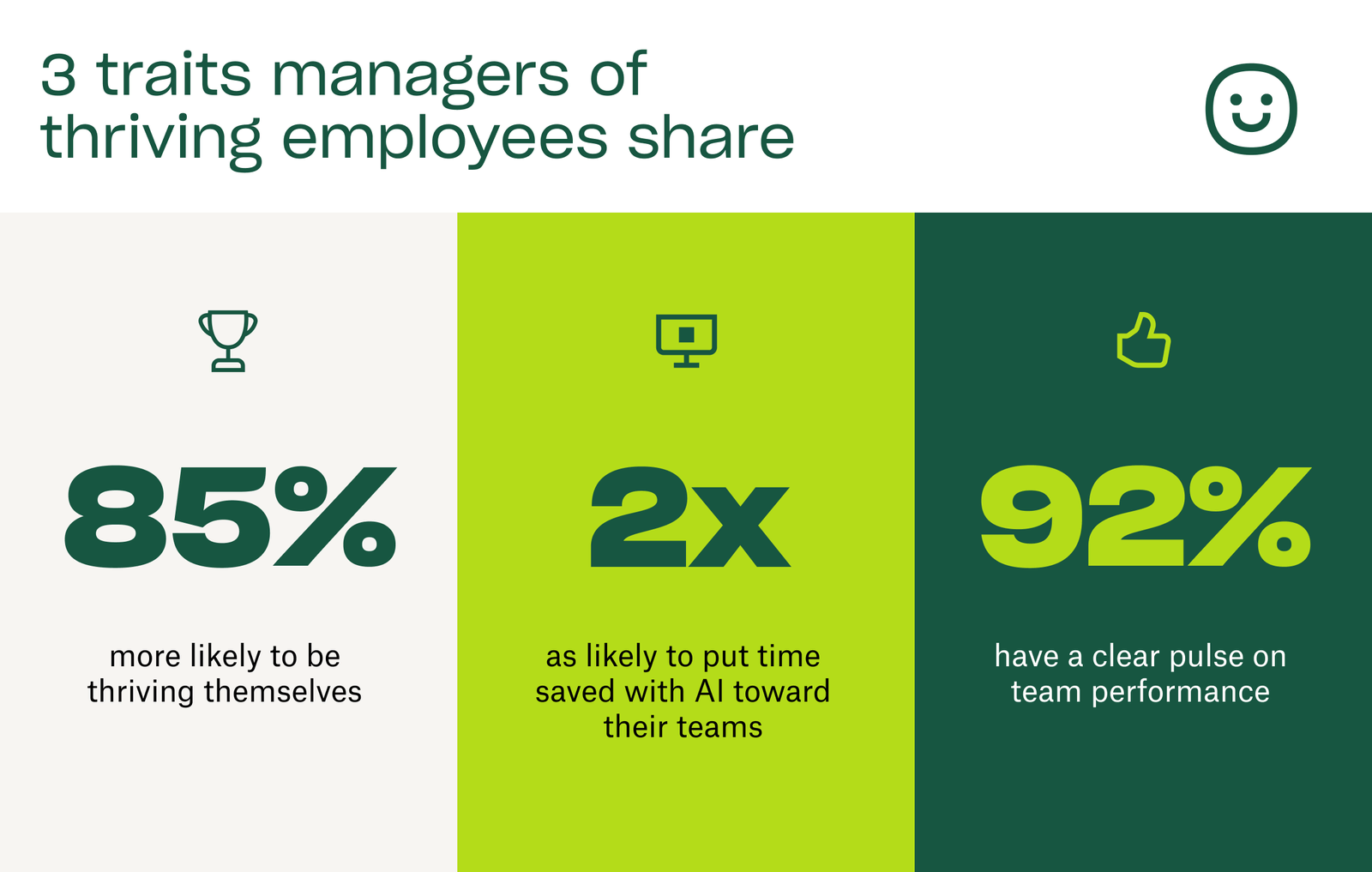
- Were 85% more likely to be thriving themselves than other managers
- Were more than twice as likely to invest AI time savings in coaching, one-on-ones, and development
- Had a clearer view of team performance, with 92% of our most senior managers reporting clarity on performance against expectations, compared with 74% of other senior managers
These findings raise an important question about management in the age of AI: What can we learn from managers whose employees are thriving, and how is AI changing their role?
Leading through a changing world of work
Just as distributed work called for more intentional leadership, the rise of AI calls on managers to guide how their teams learn, experiment, and use it.
But are they prepared? Recent Gallup research found a significant gap between companies’ desire to use AI and managers’ readiness to help their teams use it. While 99% of chief human resources officers (CHROs) say AI is important to their strategy, 50% aren’t confident managers can help employees use it effectively.
In the 2026 Microsoft Work Trend Index, employees whose managers actively modeled AI use reported greater perceived value from AI and greater trust in agentic AI. Microsoft also found that they were more AI-ready when their leaders created psychological safety around experimentation.
Our research rounds out this picture by looking at managers themselves and how their experience is reflected across teams. We found differences in performance, ways of working, and the employee experience.
3 habits of managers with thriving employees
1. They model strong performance and behaviors
When we drilled into the research, these leaders were more likely to be high performers (46% vs 33%), reported higher scores for making good progress on their own objectives (95% vs 84%), and reported greater satisfaction with the balance between deep focus and collaboration (64% vs 52%).
Our 2026 Life in Virtual First survey offers a closer look at their habits. Managers of thriving employees are more likely to:
- Send async follow-up notes after meetings (61% vs 43%)
- Avoid responding to messages during focus time or after hours (26% vs 16%)
- Share meeting agendas in advance (61% vs 53%)
- Collaborate effectively across time zones (61% vs 53%)
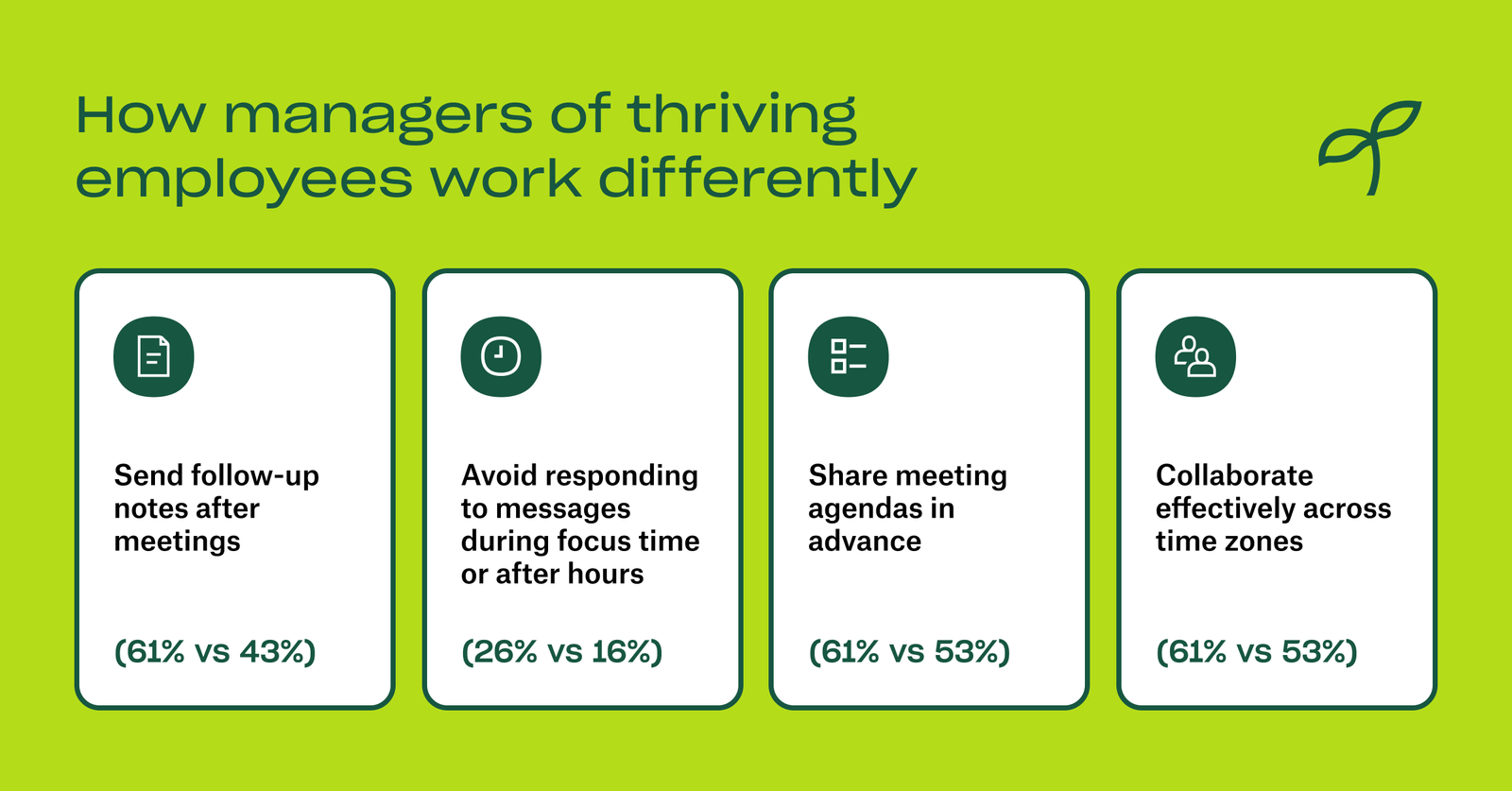
Together, these findings suggest that role-modeling matters. Leaders who practice healthy, effective ways of working make those habits feel possible for their teams.
2. They reinvest time in their people
AI can help anyone save hours. What sets managers of thriving employees apart is how they use that time. Based on our research, they’re more than twice as likely to reinvest it in coaching, one-on-ones, and team development.
Our findings also show that engaged, high-performing employees were more likely to report meaningful career development discussions (90% vs 70%) and performance feedback that helped them improve (94% vs 75%). The productivity benefit can extend beyond the manager and compound across the team.
3. They stay close to progress without getting in the way
Among our most senior managers, 92% of those with thriving employees said they understood how their teams were performing against expectations, compared with 74% of other senior managers.
That clarity was reflected in the employee experience. Thriving team members were more likely to report well-defined expectations, useful feedback, stronger development opportunities, and a sense that their perspectives mattered. Nearly all said they understood what was expected of them (99% vs 80% of others) and felt their thoughts and ideas were valued (99% vs 81%).
They also rated their managers more highly across coaching, development, and enablement, citing valuable feedback and career conversations, clear priorities, and leaders who removed barriers.
Putting the manager effect into practice
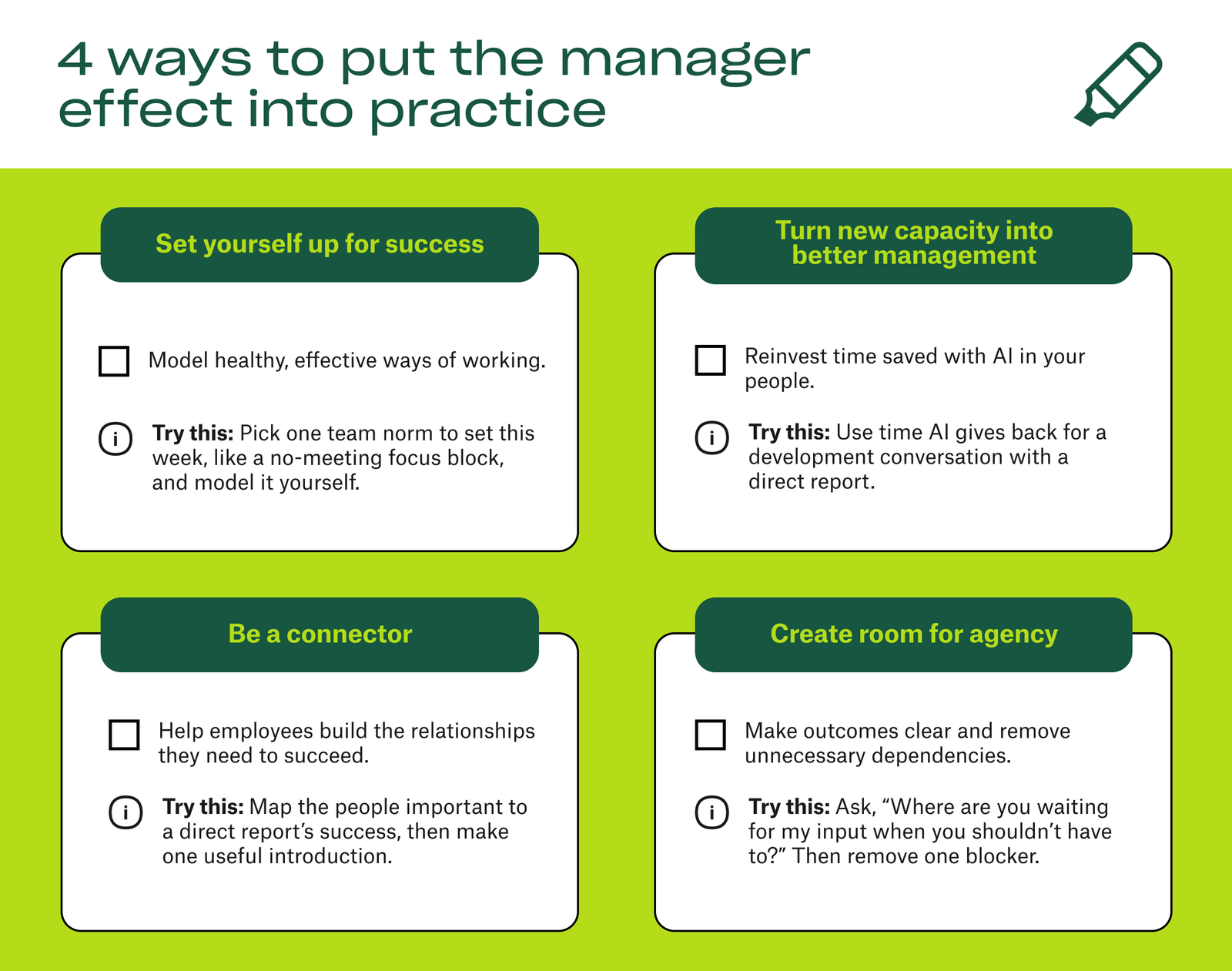
If you lead a team and want to help them do their best work in the AI era, here are four places to start.
1. Set yourself up for success
Take time to reflect on your own ways of working. Being intentional about how you manage your time and collaborate with others puts you in a better position to guide your team. Your own habits can set the tone for how everyone works.
→ Try this with your team: Define clear norms around focus time, async follow-ups, advance agendas, after-hours replies, and working across time zones.
2. Turn new capacity into better management
When AI gives you time back, consider using it toward things that matter to employees, like communication around priorities, project feedback, career conversations, and recognition.
→ Try this with your team: Pinpoint one recurring task that AI has made faster. Use some of the time it frees up for a coaching check-in, development conversation, or moment of recognition. Booking these into your calendar can help make sure you’re reinvesting intentionally.
3. Be a connector
Strong workplace relationships help people access new perspectives, expertise, and opportunities. As a manager, you can help your employees strengthen those networks through thoughtful introductions and cross-functional opportunities.
→ Try this with your team: Build a simple networking map with your direct reports. Walk through their projects together and identify the stakeholders who are important to their success. Then ask where a connection could help and make an intro.
4. Create room for agency
Thriving employees reported greater control over how they work, from protecting focus time to finding the information they need independently. Support that autonomy by making outcomes and responsibilities clear, and spelling out where they can make decisions without you.
→ Try this with your team: Ask, “Where are you waiting for my input when you shouldn’t have to?” Identify one recurring approval, decision, or handoff you can clarify or eliminate so your reports can move forward more independently.
The future manager is an architect of thriving workplaces
More than five years into Virtual First, we’ve learned that how we work deserves as much attention as the work itself. As AI changes what people spend their time on, managers have an opportunity to be more intentional about filling the space it creates.
The choices they make now will help shape what comes next. The future of Virtual First belongs to leaders who turn new capacity into greater human potential.
The Author